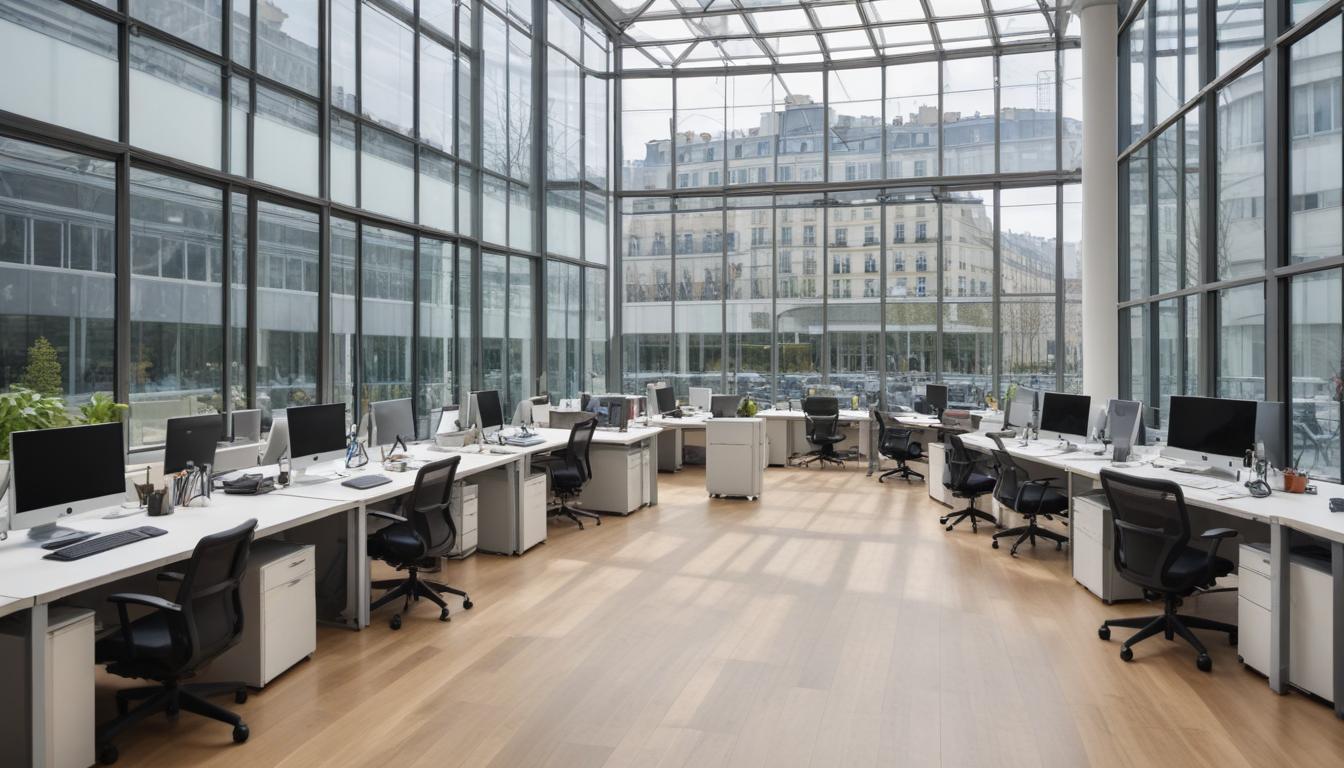
Paris's business district is buzzing with nervous energy as mid-2026 market dynamics force a reckoning among investors and entrepreneurs across the Île-de-France region. The combination of international uncertainty, currency fluctuations, and domestic cost pressures is reshaping how capital flows through France's financial hub.
Commercial real estate costs in the 8th arrondissement have plateaued after three years of steady climbs, with prime office space hovering around €850 per square metre annually—a stabilisation that masks deeper fragmentation in the market. While prestige addresses along the Champs-Élysées and around the Opéra remain resilient, secondary locations in Défense and near Gare de Lyon are seeing unexpected investor interest as firms seek cost optimisation.
The persistent weakness in emerging market currencies is creating both opportunities and headaches for French exporters and multinational offices headquartered in Paris. Companies with significant exposure to Middle Eastern or African operations—substantial for Paris-based financial institutions—are grappling with hedging costs that have doubled compared to 2024 levels. Energy sector volatility, meanwhile, is keeping operational budgets under constant review.
Consumer-facing businesses across the 6th and 7th arrondissements report margin compression. Restaurant and retail operators note that labour costs, already elevated by French employment standards, are being amplified by wage inflation tracking at 3.2 per cent year-on-year. A coffee in central Paris now averages €2.80, up sharply from €2.45 just two years ago—a barometer of broader inflationary pressure.
Banks operating from the La Défense financial district are actively repositioning portfolios away from certain geopolitical exposure, with sovereign debt concerns resurfacing in analyst briefs. Bond markets remain volatile, keeping borrowing costs elevated for medium-sized enterprises seeking expansion capital.
For businesses navigating this landscape, the consensus among finance professionals is clear: diversification is no longer optional. Companies heavily dependent on single markets or currency exposure face heightened risk. The Paris Chamber of Commerce and Industry reports increased demand for financial advisory services, particularly around currency management and supply-chain resilience.
Those positioning for opportunity point to the growing appetite among institutional investors for Paris-based tech and biotech firms—sectors that remain relatively insulated from currency swings and benefit from France's innovation funding landscape. Yet accessing that capital requires clear growth narratives and transparent risk management in an environment where investor caution has returned.
The message for Paris's business community is unambiguous: strategic agility beats bold speculation in 2026.
This article was compiled by AI from the sources linked above and screened before publishing. See our editorial standards.