wellness
Mindfulness in Schools: What Local Programs Are Available in Paris
From the 11th arrondissement to Saint-Germain-des-Prés, a growing number of Parisian schools are weaving meditation into the school day, and the evidence for doing so is mounting.
How we reported this
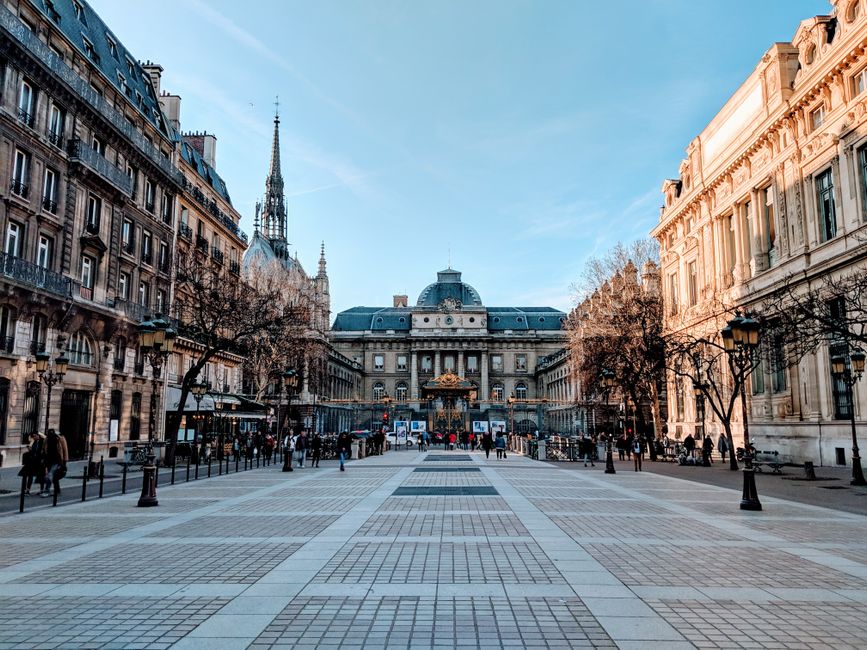
French public schools have quietly been running structured mindfulness programs for several years, but 2026 has brought renewed attention to the practice. The Ministère de l'Éducation Nationale has been piloting wellbeing-focused curricula in primary and secondary schools across Île-de-France since at least 2022, with some Paris schools now dedicating ten to fifteen minutes of guided breathing and attention exercises to the start of each school day.
Why now? Adolescent mental health data across Europe has made uncomfortable reading since the pandemic years. The World Health Organization reported in 2023 that one in six children aged 5 to 19 in the European region lives with a diagnosable mental health condition. For Paris educators, that statistic is not abstract. School counsellors and teachers in high-density arrondissements, particularly in the 18th and 19th, where classroom sizes tend to be larger, have been vocal in educational forums about rising rates of anxiety among pupils, especially in the 10-to-14 age bracket. Mindfulness, once viewed with scepticism in a rigorously secular French school system, has been reframed by proponents as a cognitive and attentional skill rather than a spiritual practice, which has helped it clear the laïcité hurdle.
Programs Taking Root Across the City
One of the most established school-facing programs in Paris is Mindfulness France, the French arm of the broader European mindfulness teacher-training network, which since 2019 has been offering MBSR-adapted (Mindfulness-Based Stress Reduction) training to primary school teachers across several Paris arrondissements. Their eight-week teacher training program, priced at around €490 per participant as of early 2026, equips educators to lead short classroom sessions without requiring pupils to adopt any specific posture or belief system. Schools in the 11th arrondissement along the Rue de la Roquette corridor have been among the early adopters.
L'Association Enfance et Pleine Conscience, based near the Canal Saint-Martin in the 10th arrondissement, runs direct in-school programs where trained facilitators visit classrooms for six-week blocks. The association works primarily with école primaires and collèges in northern Paris. Their model involves three sessions per week, each running approximately twelve minutes, built around breath awareness, body-scan exercises, and what they describe as attentional games for younger children. Families interested in the program can find information through their local mairie or via the association's own network.
Beyond the formal associations, individual schools have been quietly experimenting. The Lycée Henri-IV near the Panthéon in the 5th arrondissement, one of Paris's most academically pressured schools, introduced optional lunchtime meditation sessions in 2024 as part of a broader student wellbeing initiative. The sessions, held in a converted study room rather than a dedicated space, are student-led with guidance from a trained staff member.
What the Evidence Actually Says
The scientific record on school mindfulness is more nuanced than the enthusiasm sometimes suggests. A landmark meta-analysis published in Psychological Bulletin in 2019, still widely cited by practitioners, examined 61 randomised controlled trials and found that mindfulness-based interventions in schools produced modest but meaningful reductions in anxiety, stress, and depression symptoms among children and adolescents. Effect sizes were larger when programs ran for more than five weeks and when teachers, rather than outside facilitators, delivered the sessions.
That distinction matters practically. Programs that depend on visiting facilitators face funding gaps; those embedded in teacher practice tend to persist. The per-pupil cost of Mindfulness France's teacher-training model works out to significantly less than one euro per child per school year once a trained teacher is in place, making the economics reasonable even for schools operating under tight budgets.
For Paris parents who want to explore whether their child's school participates, the first step is contacting the school's conseiller principal d'éducation (CPE) directly, or checking with the local Direction des Services Départementaux de l'Éducation Nationale de Paris. Private mindfulness instruction for children is also available at several yoga studios in the Marais and around Saint-Sulpice, typically running €15 to €25 per session. As with any intervention touching on a child's psychological wellbeing, parents should speak with their médecin traitant or a child psychologist before enrolling a child with existing mental health needs.