news
Paris Landlords Flood Rental Market With Fake Photos, Deceiving Thousands
Duplicate and doctored images in housing ads are distorting the already strained Paris rental market, leaving thousands of residents locked into properties that bear no resemblance to what they were shown online.
How we reported this
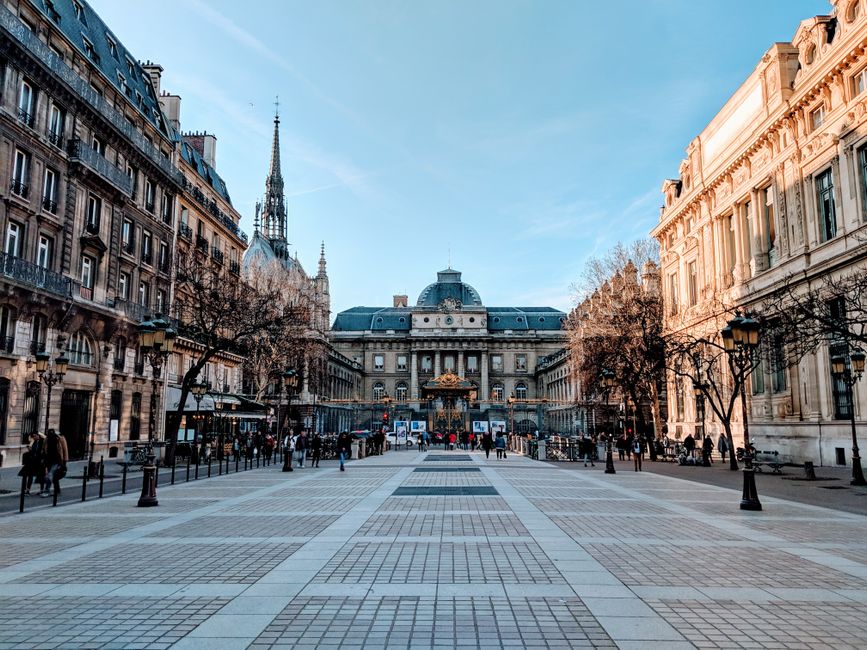
Renters in Paris are signing leases on apartments they have never physically visited, only to discover on moving day that the bright, Haussmann-moulded salon in the listing photos belongs to a different flat three floors up, or a different arrondissement entirely. The practice of recycling and duplicating property images across multiple listings has become endemic on France's major platforms, according to a report published last month by the Institut National de la Consommation, which analysed more than 14,000 rental ads posted between January and May 2026 on sites including SeLoger and Leboncoin.
The timing matters. Paris's rental market is under extraordinary pressure heading into the second half of 2026. The post-Olympics demand surge that began after the Paris 2024 Games has not let up in the inner arrondissements, and the Grand Paris Express construction corridor, stretching through Saint-Denis, Villejuif and Champigny-sur-Marne, is pushing displaced residents back toward the city centre. Average rents in the 10th and 11th arrondissements have climbed to roughly €28 per square metre per month, up from €24.50 in early 2024. Tenants are moving fast, sometimes booking virtual tours and wiring deposits within 48 hours of a listing going live.
How the Scam Works, and Who Gets Hurt
The mechanics are straightforward and hard to police. A landlord or a shady intermediary takes a single set of flattering photographs from one property, often a professionally staged unit on the rue de la Roquette or near the Canal Saint-Martin, where demand is fiercest, and reuses them across several listings, each with different addresses and often different floor plans. Software capable of detecting reverse-image duplication exists, but neither SeLoger nor PAP applies it systematically at the point of upload, according to the INC report.
The victims are disproportionately students and young professionals relocating from outside Paris who cannot easily conduct in-person visits. The Crous de Paris, which manages student housing for the Île-de-France region, says complaints related to misleading imagery in private-sector listings rose 34 percent in the 2025-2026 academic year compared with the previous one. The organisation handles overflow demand from students who cannot secure a Crous room and are forced into the open market.
The association CLCV, Consommation Logement Cadre de Vie, opened a dedicated hotline for image fraud complaints at its Paris office on the boulevard Voltaire in March 2026. By June 30, it had logged 412 formal cases from Île-de-France alone, with median financial harm, deposits lost, removal costs, emergency hotel stays, running to €1,850 per household.
What Regulators and Platforms Are Being Asked to Do
France's Autorité de régulation de la communication audiovisuelle et numérique, ARCOM, extended its remit to cover commercial property platforms under a decree issued in February 2026. The agency now has the theoretical power to issue compliance notices and fines of up to 4 percent of annual turnover for platforms that fail to implement basic image-verification protocols. No fine has yet been issued, but ARCOM confirmed to industry press last week that it opened formal inquiries into two unnamed platforms in June.
The mairie of Paris's Direction du Logement et de l'Habitat has been pushing since March for mandatory image-hash registration, essentially a digital fingerprint system that would flag when the same photo appears in multiple separate listings. A pilot covering listings in the 18th, 19th and 20th arrondissements is scheduled to launch in September 2026, contingent on cooperation from at least three of the major platforms.
For residents searching now, the CLCV advises demanding that any landlord or agent share a timestamped video walkthrough showing the flat's windows, the view from them, and the building entrance on a live call before any deposit changes hands. Cross-checking listing photos using Google Images or TinEye takes under two minutes and has already caught dozens of fraudulent ads flagged by users in the Île-de-France Facebook housing groups, which collectively have more than 180,000 members. Until the September pilot proves itself, that two-minute check may be the most reliable protection Paris renters have.